15 Creative Developer Portfolios That Will Make Tech Recruiters Stop Scrolling (2026)
Tech recruiters and hiring managers sift through hundreds of developer portfolios every single week. In under six seconds, a decision is made: bookmark for a screening call or close the tab.
Most portfolios look identical: a generic hero section, a grid of generic todo-app project cards, a list of icon skill badges, and a contact form. When every candidate uses the same default templates, recruiters develop banner blindness.
The developers landing offers at competitive startups and premier tech companies in 2026 approach their portfolios differently. They treat their personal website as living proof of craftsmanship, balancing creative interaction with frictionless technical storytelling.
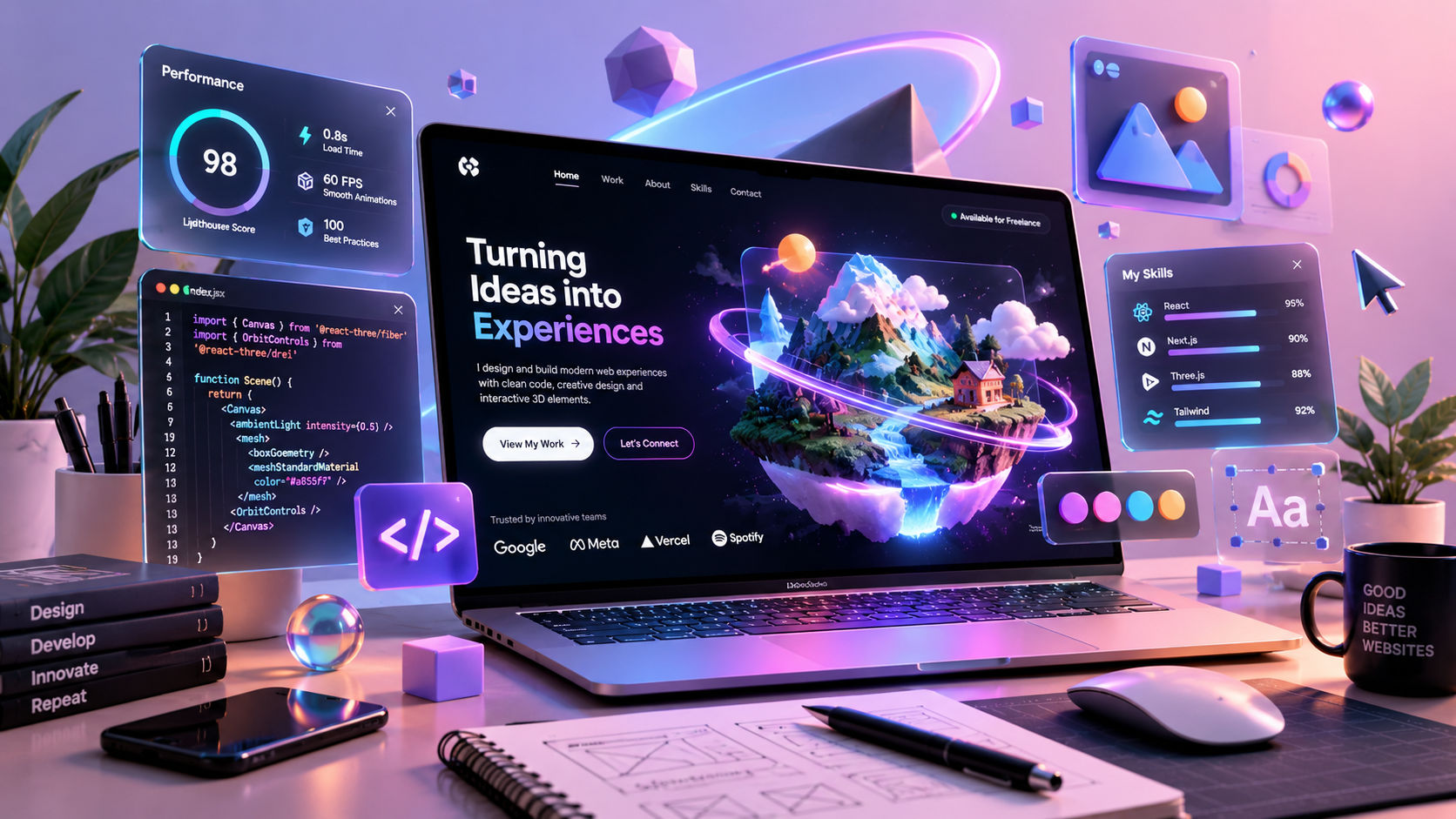
Here are 15 creative developer portfolio concepts that command attention in 2026, along with actionable takeaways you can incorporate into your own site today.
Before diving into the styles, remember the ironclad rule of developer portfolios:
"Be creative in the hero section, but crystal clear in the case studies."
Recruiters love creativity that demonstrates product intuition, but they will bounce immediately if your creative navigation hides your resume, GitHub profile, or actual tech stack. Every portfolio below balances personality with direct access to core information.
1. The Interactive CLI / Terminal Experience
Best For: Backend Engineers, DevOps / SRE, Systems Programmers
Instead of standard HTML cards, the site greets visitors with a responsive command-line prompt (guest@alex-portfolio:~$).
- The Hook: Visitors can type commands like
help, skills, projects --deployed, or cat contact.txt.
- The Modern Polish: Includes tab auto-completion, command history recall (up/down arrow keys), and a GUI toggle for recruiters who prefer not to type.
- Why It Works: It proves immediate familiarity with shell tooling, Linux environments, and keyboard-first accessibility.
2. The Apple-Style "Bento Box" Grid
Best For: Full-Stack Developers, Product Engineers
Inspired by iOS widgets and Apple product release pages, the portfolio organizes projects, live stats, current location, and tech stack into high-contrast, rounded modular cards.
- The Hook: Individual cards feature mini-interactions—one card displays live GitHub commit heatmaps, another has a playable sound bite of pronunciation, and a third shows current Spotify activity via API.
- The Modern Polish: Subtle mouse-tracking radial borders using CSS
conic-gradient and glassmorphic depth.
- Why It Works: It communicates maximum information density in an organized, mobile-responsive layout without visual clutter.
3. The 2D Retro Desktop (macOS / Windows 98 Simulator)
Best For: Creative Frontend Developers, UI/UX Engineers
The viewport renders an operating system desktop complete with draggable windows, desktop icons, a functional taskbar, and a mini audio player.
- The Hook: Double-clicking "Projects.folder" opens a clean file explorer window; double-clicking "Resume.pdf" opens a custom PDF viewer window.
- The Modern Polish: Snappy window z-index layering, minimize/maximize animations, and dark/light retro themes.
- Why It Works: It immediately proves mastery over complex DOM state management, drag-and-drop physics, and UI event architectures.
4. The Live Code Sandbox Hero
Best For: React, Vue, or Web Component Specialists
Rather than asking recruiters to trust their skills, the developer places an interactive, live code editor directly in the hero fold.
- The Hook: A live component preview on the right updates instantly as the visitor adjusts parameters (sliders for padding, themes, and animations) in an embedded Monaco editor on the left.
- The Modern Polish: Pre-built buttons labeled "Test Edge Cases", "Toggle Mobile Viewport", and "Inspect Performance Stats".
- Why It Works: Nothing builds credibility faster than letting hiring engineers interact with raw, functioning frontend architecture within seconds of landing.
5. The Metrics-Driven Systems Dashboard
Best For: Senior & Staff Engineers, Cloud Architects
Designed like an enterprise Datadog or Grafana monitoring dashboard, this portfolio frames career accomplishments as live service metrics.
- The Hook: Top-level metrics highlight production impact:
99.99% Uptime Maintained, 1.2M Monthly Requests Handled, 42% Cloud Spend Reduction.
- The Modern Polish: Interactive filter switches allowing recruiters to view projects by scale: Enterprise (10M+ users), Microservices, or High-Throughput Pipelines.
- Why It Works: Senior engineering roles demand business impact over visual flair. This structure speaks the language of engineering directors.
6. The Interactive Physics Playground
Best For: Creative Web Technologists, Canvas & Animation Devs
Visitors can drag, flick, and knock together interactive physical tokens representing skill competencies or featured case studies using 2D physics engines like Matter.js.
- The Hook: Skill badges drop from the top of the screen with gravity. Clicking a badge expands it into a comprehensive modal detailing production experience with that technology.
- The Modern Polish: Subtle haptic feedback on touch devices and a "Reset Gravity" button.
- Why It Works: Demonstrates mathematical animation fluency and canvas rendering performance at a steady 60 frames per second.
Best For: Full-Stack Engineers with Strong Written Communication
Borrowing aesthetic principles from The New Yorker or high-end technical publications, this design emphasizes rich serif typography, generous white space, and detailed architectural diagrams.
- The Hook: Instead of superficial three-sentence summaries, each project is a meticulously formatted case study explaining:
- The Core Engineering Challenge
- The Trade-Offs (Why SQL over NoSQL for this specific constraint)
- The Post-Mortem and Measurable Outcome
- Why It Works: Technical writing is one of the highest-paid engineering skills. Communicating trade-offs clearly signals maturity.
8. The Micro-Interaction Minimalist
Best For: Design Engineers, UI Engineers
A clean monochrome aesthetic (pure black, white, and subtle zinc) where every interaction feels extraordinarily tactile.
- The Hook: Magnetic cursor attraction on buttons, smooth spring-physics transitions, and custom cursor text indicating "View Live Demo" when hovering cards.
- The Modern Polish: Sub-second page load times (< 400ms) with zero layout shift.
- Why It Works: Shows recruiters that the developer obsesses over execution details, accessibility, and web performance budgets.
9. The "Recruiter Mode" Toggle Switch
Best For: All Developers with High Ambition
A clever hybrid solution for developers who want to show creative flair without risking recruiter frustration.
- The Hook: A prominent fixed toggle at the top of the page:
[Creative Experience 🎨] ⟷ [Recruiter Fast Mode ⚡].
- The Modern Polish: Clicking "Fast Mode" strips away 3D assets and animations, transforming the entire page into a clean, scannable one-page executive summary with direct links to GitHub, LinkedIn, and PDF downloads.
- Why It Works: Solves the classic dilemma: technical peers get to explore your creative tech demos, while hurried recruiters can copy your skills list in ten seconds flat.
10. The Git Graph Visualizer Timeline
Best For: Open Source Contributors, Full-Cycle Developers
The "Experience" section is built as an interactive Git branching tree (main, feature/startup-exit, release/v2.0).
- The Hook: Clicking individual "commit nodes" expands pull-request summaries outlining contributions, code reviews, and technologies introduced at each job.
- The Modern Polish: Terminal-inspired diff viewers showing snippets of key architectural contributions.
- Why It Works: Speaks natively to engineering workflows and presents career progression as continuous, verified iteration.
11. The Audio-Visual Synthesizer
Best For: Web Audio API Enthusiasts, Multimedia Web Devs
The portfolio integrates subtle, non-intrusive sound design created with the Web Audio API.
- The Hook: Gentle UI clicks, pleasant frequency chords when switching sections, and an interactive synthesizer pad embedded as a project showcase.
- The Modern Polish: Audio defaults to strictly muted with a clear, visible speaker toggle to respect office environments.
- Why It Works: Demonstrates deep mastery of browser multimedia APIs outside standard CRUD application patterns.
12. The 3D Isometric Workstation
Best For: 3D Web Developers, WebGL / Spline Designers
An interactive 3D digital twin of a developer's workspace that rotates slightly based on cursor parallax.
- The Hook: Clicking the computer monitor loads project demos, clicking the coffee cup reveals an "About Me" journey, and clicking the phone triggers a contact pop-up.
- The Modern Polish: Built using lightweight runtimes (like Spline WebGL) to maintain sub-2MB bundle sizes and instantaneous loading.
- Why It Works: Immediately showcases capability in emerging spatial web and 3D user experience domains.
13. The "Diff Viewer" Project Case Study
Best For: Refactoring Experts, Legacy Migration Specialists
Instead of merely displaying the finished product, the project page presents a GitHub-style split-screen diff showing Before vs. After.
- The Hook: On the left: legacy architecture bottleneck (e.g., 4.2s page load, N+1 query vulnerability). On the right: the candidate's refactored solution (e.g., edge caching, sub-200ms latency, benchmark charts).
- Why It Works: Proves you don't just write greenfield apps—you know how to debug, optimize, and rescue production codebases.
14. The Neo-Brutalist High-Contrast Statement
Best For: Independent Contractors, Indie Hackers
Characterized by bold black borders, vibrant pop colors (canary yellow, electric cyan), heavy drop shadows, and oversized monospace headlines.
- The Hook: Raw, opinionated design that discards corporate polish in favor of raw energy and direct copywriting.
- The Modern Polish: Fluid responsive typography, snappy hover offsets (
translate: -4px -4px), and zero external CSS bloat.
- Why It Works: Instantly memorable. In a sea of muted corporate blue portfolios, a confident brutalist aesthetic is impossible to overlook.
15. The "Choose Your Own Adventure" Technical Tour
Best For: Versatile Polyglot Engineers
A dynamic onboarding flow where visitors choose their persona upon entering:
-
"I am a Hiring Manager"
-
"I am a Fellow Engineer"
-
"I am a Founder with an Idea"
-
The Hook: Selecting a persona reorganizes the portfolio content in real-time. Recruiters see salary expectations, availability, and high-level case studies; engineers see GitHub repos, architecture diagrams, and system design writeups.
-
Why It Works: Highlights acute user empathy and advanced client-side state filtering.
5 Portfolio Traps That Cost Developers Offers
Even the most creative design will fail if it makes these fatal mistakes:
- Sluggish Initial Load Time: If your 3D canvas or uncompressed assets take more than 3 seconds to load, over 50% of mobile recruiters will bounce before seeing your name.
- Hidden Contact Info: If someone has to click three obscure puzzle buttons just to find your email or LinkedIn, you have lost the referral.
- Dead Project Links: A portfolio showcasing 404 links or broken Heroku demo dynos immediately signals poor attention to detail.
- Desktop-Only Design: More than 40% of initial link clicks from LinkedIn or email happen on mobile devices. Test your creative interactions rigorously on iOS and Android viewports.
- No Code Repositories: Never link only to deployed sites without offering viewable source code or deep-dive architectural summaries. Recruiters want to verify your commit habits and code quality.
Action Plan: Level Up Your Portfolio This Weekend
You do not need to rebuild your portfolio from scratch to benefit from these patterns:
- Pick One Creative Hook: Choose one signature idea (a terminal modal, an interactive bento card, or a live demo sandbox) and make it the focal point of your hero section.
- Revamp Two Case Studies: Convert vague bullet points into problem-solution-impact narratives. Highlight specific trade-offs and business metrics.
- Audit Performance: Run a Google Lighthouse test. Compress all images to WebP/AVIF format, lazy-load heavy scripts, and aim for a performance score above 90.
Your portfolio is more than an archive of past code—it is the ultimate demonstration of how you think, build, and deliver value.