Why Every Developer Should Have a Personal Website
Your GitHub profile is useful.
Your LinkedIn profile is useful.
Your resume is essential.
But none of them completely belongs to you.
Your personal website is different.
It gives you a place on the internet where you control the content, presentation, and story.
For developers, that makes a personal website much more than an online portfolio.
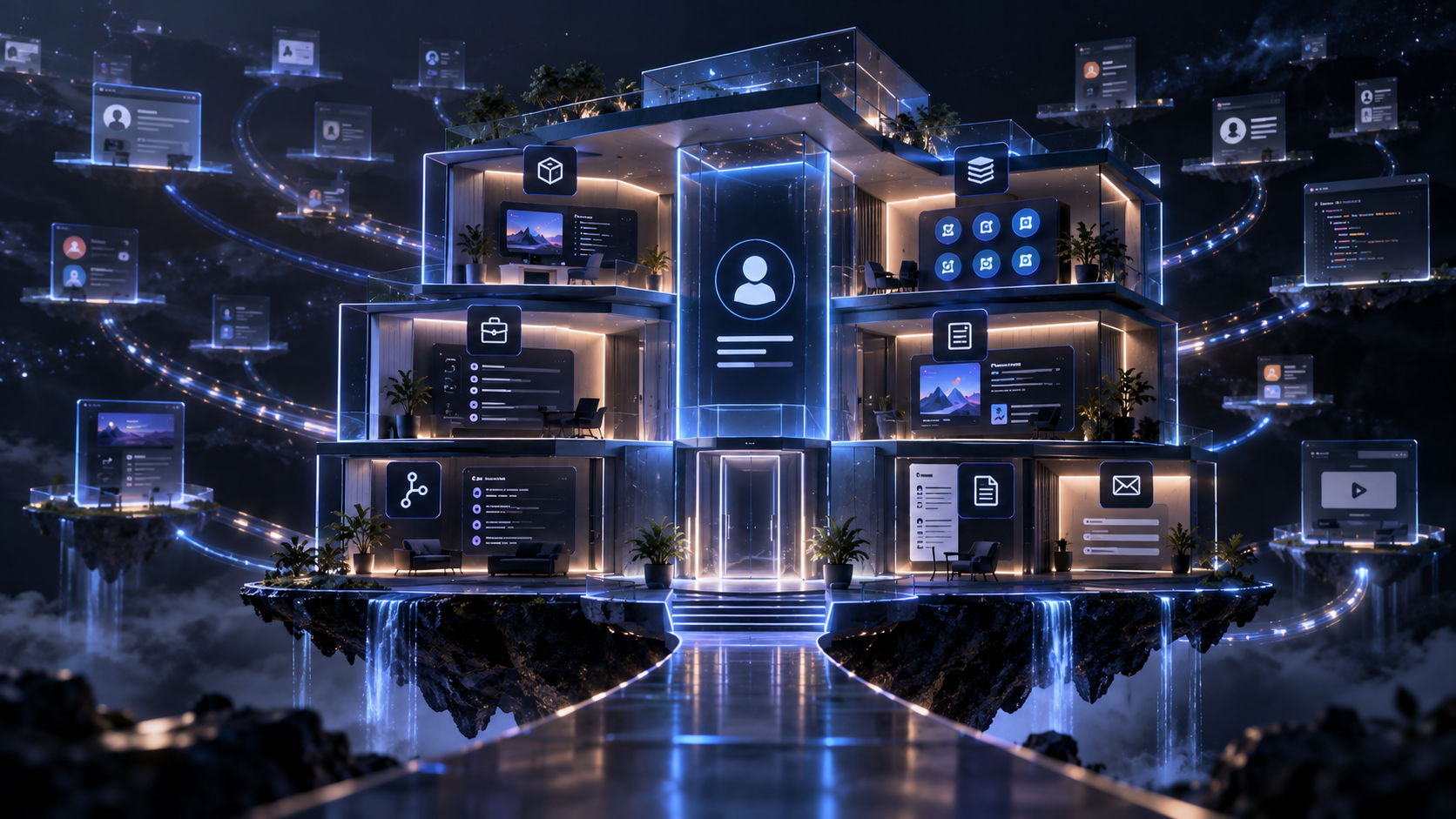
It can become your professional home on the internet.
Whether you're a student looking for your first internship, a freelancer trying to attract clients, or an experienced engineer exploring new opportunities, having your own website can provide advantages that profiles on other platforms simply can't.
Here's why.
1. You Control Your Professional Identity
When your professional presence exists entirely on third-party platforms, you're working within someone else's system.
LinkedIn determines the profile layout.
GitHub determines how repositories are presented.
Job platforms determine how your information is displayed.
Your personal website gives you control.
You decide:
- What people see first
- How your projects are presented
- What information you share
- How your experience is explained
- What your visual identity looks like
- How people contact you
Instead of fitting your career into someone else's template, you create your own.
2. Your Website Becomes Your Digital Home
Think of your personal website as the central hub for your professional identity.
It can connect everything together:
Personal Website
→ Portfolio
→ GitHub
→ Resume
→ LinkedIn
→ Projects
→ Articles
→ Contact
Instead of sending someone five different links, you can send them one.
For example:
yourname.dev
That single address can become the place people go whenever they want to learn more about you.
3. It Gives You More Space to Show Your Work
A resume has limited space.
LinkedIn has a standardized structure.
GitHub focuses primarily on repositories.
A personal website doesn't have the same constraints.
You can create detailed pages for your most important projects.
For each project, you can explain:
- The problem
- Your solution
- Your role
- Technical decisions
- Architecture
- Challenges
- Results
- Lessons learned
This can turn a simple project into a compelling case study.
4. Your Portfolio Can Show Your Personality
Two developers can have identical technical skills and completely different personalities.
Your website gives you a chance to communicate yours.
Your design might be:
- Minimal
- Experimental
- Technical
- Playful
- Editorial
- Futuristic
- Professional
The goal isn't to make your website flashy.
It's to make it feel like you.
A personal website can communicate things that a standardized resume cannot.
5. It Can Help You Stand Out
Many developers have:
- A GitHub profile
- A LinkedIn account
- A resume
Fewer have a thoughtfully built personal website.
That alone doesn't guarantee a job.
But a strong website can make you more memorable.
Imagine a recruiter reviewing several candidates.
One candidate sends:
Resume.pdf
Another sends:
Resume.pdf + GitHub
Another sends:
yourname.dev
where the recruiter can immediately explore projects, experience, technical skills, and work samples.
The third candidate has created an additional opportunity to make an impression.
6. It Demonstrates More Than Coding Skills
Building a website demonstrates more than frontend development.
It can also show:
- Product thinking
- UX awareness
- Communication
- Content organization
- Attention to detail
- Performance optimization
- Accessibility
- SEO
- Deployment
- Technical decision-making
Even a relatively simple website can demonstrate that you care about how your work is presented.
7. It Can Help Recruiters Find You
A personal website can also contribute to your online discoverability.
Search engines can index your website.
Someone searching your name may find:
- Your portfolio
- Your projects
- Your articles
- Your technical writing
- Your professional profile
This becomes particularly useful if you publish content.
For example, you could write about:
- React
- TypeScript
- Backend development
- AI
- Cloud infrastructure
- Developer tools
- Lessons from projects
Over time, those articles can attract people who are interested in the same topics.
8. You Can Build a Personal Brand
"Personal brand" can sound complicated.
It doesn't have to be.
It simply means developing a recognizable professional identity.
For example:
"The developer who writes about frontend performance."
Or:
"The engineer building open-source developer tools."
Or:
"The full-stack developer experimenting with AI products."
Your website can reinforce that identity.
Over time, your projects, articles, and online presence can all point in the same direction.
9. You Can Publish Technical Content
A personal website doesn't have to be only a portfolio.
It can also be your technical publishing platform.
You can write articles about:
- Problems you've solved
- Things you've learned
- Tutorials
- Project breakdowns
- Architecture decisions
- Development workflows
- Technology comparisons
- Career lessons
Writing publicly can demonstrate communication skills while also creating content that people can discover through search.
10. It Gives You a Place to Explain Your Projects Properly
A GitHub repository might tell someone:
"Real-time chat application."
Your website can tell the complete story.
For example:
"I built the application to explore real-time communication at scale. The initial implementation used frequent polling, but I replaced it with WebSocket-based communication and redesigned the message synchronization flow."
That's much more informative.
Your website gives you space to explain how you think, not just what you built.
11. You Can Own Your Domain
A custom domain is one of the simplest ways to establish a professional presence.
Something like:
yourname.dev
or:
yourname.com
is easy to remember and easy to share.
You can put it on:
- Your resume
- GitHub profile
- LinkedIn
- Email signature
- Business cards
- Social profiles
One domain can become the permanent address for your professional identity.
12. You Can Update It Whenever You Want
Your career changes.
Your skills change.
Your projects change.
Your goals change.
Your website can change with you.
You can add:
- New projects
- New experience
- New certifications
- New articles
- New skills
- New achievements
You don't have to wait for a platform to introduce a new profile feature.
You control the content.
13. It Can Create Opportunities You Didn't Expect
A personal website isn't only useful when you're applying for jobs.
Someone might discover your website through:
- Google
- GitHub
- An article
- A social post
- A referral
- An open-source contribution
They might then reach out about:
- Freelance work
- A job
- A collaboration
- A startup idea
- An open-source project
- Speaking
- Consulting
Your website can continue working for you even when you're not actively looking for an opportunity.
14. It Can Help Freelancers Attract Clients
For freelancers, a personal website can function as a sales asset.
Potential clients want to know:
- What can you build?
- Have you done similar work?
- What technologies do you use?
- What results have you achieved?
- How can I contact you?
A well-structured website can answer all of these questions.
You can also include:
- Services
- Testimonials
- Case studies
- Client work
- Contact forms
- Availability
That makes the website useful beyond traditional job hunting.
15. It Shows That You Can Finish Something
This is an underrated benefit.
A personal website is a project that you have to:
- Design
- Build
- Deploy
- Maintain
- Improve
It demonstrates initiative.
It also shows that you can take something from an idea to a finished product.
That's valuable regardless of your specific technical role.
16. You Can Experiment With New Technologies
Your personal website can become a safe place to experiment.
Want to learn:
- WebGL?
- Three.js?
- New CSS features?
- Animation?
- A new framework?
- Edge deployment?
- AI integrations?
Your portfolio can become the project where you try them.
Just remember that experimentation shouldn't make the website difficult to use.
17. You Can Make Your Resume Interactive
Instead of simply linking a PDF, your website can provide a richer version of your professional history.
Visitors can explore:
- Experience
- Projects
- Skills
- Education
- Certifications
- Achievements
Then download your resume if they want a traditional format.
This gives visitors both options.
Explore online → Download PDF
18. It Can Demonstrate Your Communication Skills
Developers often focus heavily on technical skills.
But communication matters too.
Your website can demonstrate that you can explain:
- Technical concepts
- Project decisions
- Problems
- Solutions
- Results
A developer who can both build and explain their work is valuable.
Your project descriptions and articles can become evidence of that ability.
19. Your Website Can Grow With Your Career
Your first portfolio might be simple.
That's okay.
You can start with:
- Introduction
- Skills
- Three projects
- Resume
- Contact
Later, you can add:
- Case studies
- Blog
- Open-source contributions
- Testimonials
- Speaking
- Certifications
- Services
- Now page
- Newsletter
Your website doesn't need to contain everything on day one.
Build the foundation first.
20. It Makes Sharing Your Work Easier
Imagine someone asks:
"What kind of work do you do?"
Instead of sending several files and links, you can simply send:
yourname.dev
That's it.
One link can communicate your:
- Identity
- Skills
- Projects
- Experience
- Writing
- Contact information
That simplicity is valuable.
What Should a Developer Personal Website Include?
You don't need a huge website.
A strong starting structure is:
Home
A clear introduction and your strongest work.
Projects
Your best projects with useful context.
About
Your background and interests.
Experience
Professional history and achievements.
Skills
Your core technical stack.
Resume
Downloadable resume.
A simple way to reach you.
You can add additional sections as your needs grow.
What If You Don't Have Many Projects?
You can still build a personal website.
If you're a student or beginner, focus on:
- Personal projects
- Coursework
- Hackathons
- Open-source contributions
- Technical experiments
- Learning journey
You don't need professional experience to create a professional website.
Your website can show your potential, not just your history.
What If You Don't Have Design Skills?
Don't let that stop you.
A professional website doesn't require complicated visual design.
Start with:
- Simple typography
- Consistent spacing
- Limited colors
- Clear sections
- Strong project screenshots
- Responsive design
You can always improve the visual design later.
Clarity is more important than complexity.
What If You Don't Know How to Build a Website?
You have several options.
You can:
- Build it from scratch
- Use a framework
- Start with a template
- Use a portfolio platform
- Use a website builder
The important thing is to actually create a useful professional presence.
You don't need to spend months building the infrastructure before publishing your first version.
Personal Website vs LinkedIn vs GitHub
These platforms serve different purposes.
| Platform | Best For |
| ---------------- | -------------------------------------------- |
| Personal Website | Professional identity and complete portfolio |
| LinkedIn | Networking and professional discovery |
| GitHub | Code and open-source work |
| Resume | Concise career summary |
You don't have to choose one.
Use them together.
Your website can act as the central hub connecting the rest.
Your Website Doesn't Need to Go Viral
A personal website doesn't need millions of visitors.
You might only get a handful of visitors each month.
But one of those visitors could be:
- A recruiter
- A hiring manager
- A potential client
- A founder
- Another developer
- A future collaborator
You don't need huge traffic.
You need the right people to find useful information when they visit.
A Simple Personal Website Strategy
If you're starting from zero, follow this approach:
Step 1: Get a Domain
Choose a simple domain that's easy to remember.
Step 2: Write Your Introduction
Explain who you are and what you build.
Step 3: Add Your Best Projects
Start with three strong projects.
Step 4: Add Your Experience
Keep it concise and focused on impact.
Step 5: Add Your Skills
Highlight your core technologies.
Step 6: Add Your Resume
Make it easy to download.
Give people an obvious way to reach you.
Step 8: Publish
Don't wait until it's perfect.
Step 9: Improve It
Update the website as your career develops.
Final Thoughts
Every developer doesn't technically need a personal website.
But every developer can benefit from having a place that represents their work and professional identity on their own terms.
Your GitHub shows your code.
Your resume summarizes your experience.
LinkedIn helps you network.
Your personal website can bring everything together.
It gives you control over how your work is presented, provides space to explain your projects, helps people discover you, and creates a professional home that can grow with your career.
You don't need an elaborate design.
You don't need dozens of projects.
You don't need thousands of visitors.
Start with a simple website that clearly communicates who you are, what you build, and how people can reach you.
Then keep improving it.
Because your career will change.
Your skills will change.
Your projects will change.
Your website should change with you.